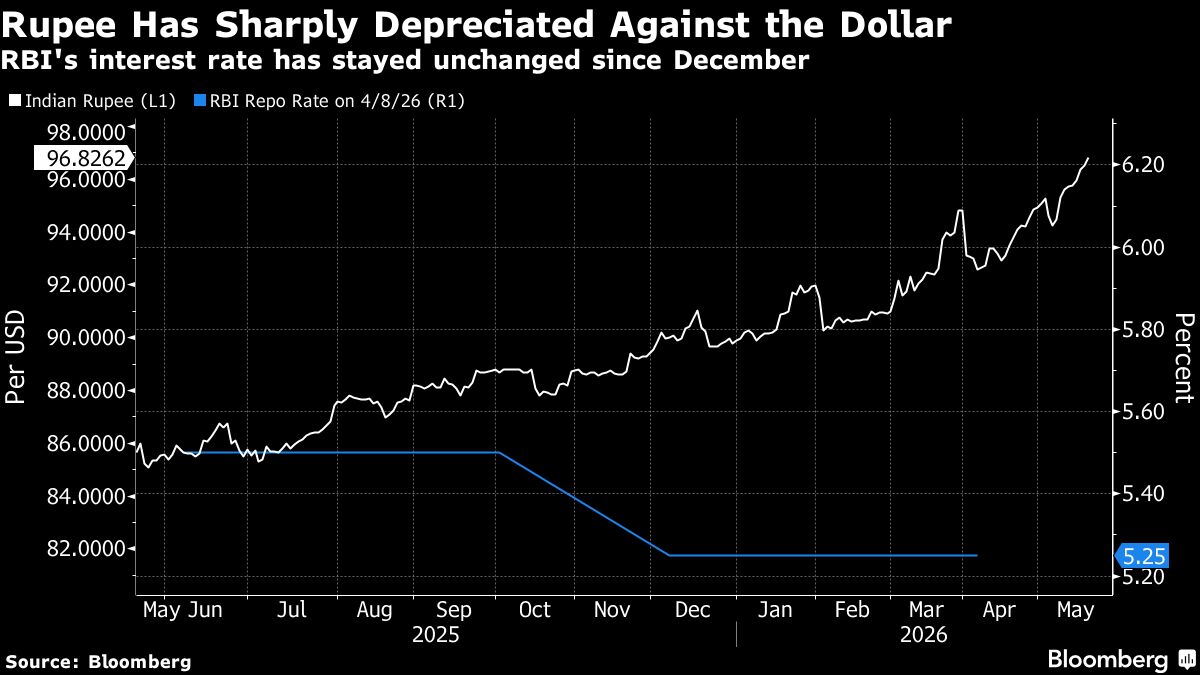
NEWS.AOT-AI.IO - The Indian central bank is reportedly preparing to deploy historical defense mechanisms as the nation's currency, the Rupee, experiences significant depreciation pressure in global markets. This current fiscal environment is prompting policymakers to look back at previous periods of financial stress for guidance.
What specific actions might be taken centers on strategies implemented during past periods of volatility. Specifically, the Reserve Bank of India (RBI) is considering revisiting the playbook used during the 2013 Taper Tantrum incident.
Who is leading this defensive posture is the RBI, which holds the responsibility for maintaining monetary stability and managing the foreign exchange rate. This institution must now formulate an effective strategy to counter the ongoing decline of the Rupee.
When these measures might be fully enacted depends on the severity and persistence of the current market turbulence. The consideration of past crises suggests an immediate need to bolster confidence in the Indian financial system.
Why the RBI is turning to these older strategies is due to the current vulnerability of the Rupee against major global currencies. Drawing parallels with past balance-of-payments challenges indicates a serious concern over capital outflows or external shocks affecting the exchange rate.
How the RBI plans to execute this defense involves potentially activating tools that were previously successful in stemming rapid currency depreciation. These tools typically include foreign exchange market interventions and liquidity management operations.
As reported by sources familiar with the central bank's deliberations, the institution may need to draw on its 2013 taper tantrum playbook and earlier balance-of-payments crises to mount an effective defense of the beleaguered rupee.
These historical precedents offer a roadmap for managing capital flight and reassuring international investors about the stability of India's external accounts. The effectiveness of these past maneuvers is now being scrutinized for contemporary applicability.
The context for this renewed focus is the increasing global uncertainty that often leads investors to pull capital from emerging markets like India. Such sentiment places direct and immediate downward pressure on the Rupee's valuation.