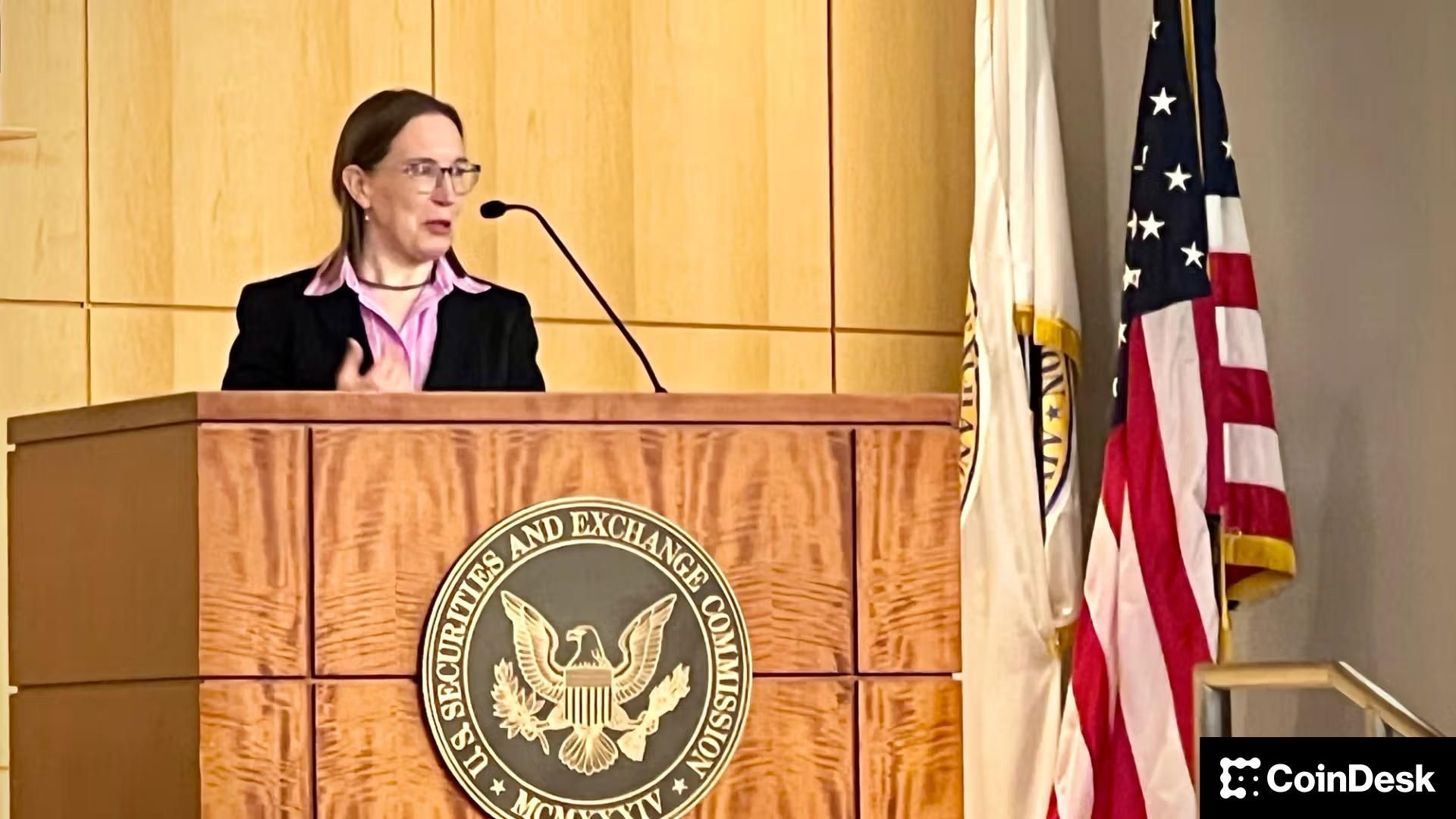
NEWS.AOT-AI.IO - SEC Commissioner Hester Peirce has publicly contested the prevailing view suggesting that forthcoming regulatory frameworks for the digital asset space will inadvertently encourage the proliferation of synthetic tokens. This stance comes amid ongoing industry discussions about how new rules might shape future innovation and product development within the cryptocurrency sector.
The debate centers on whether stricter oversight, particularly concerning stablecoins or asset-backed tokens, might push developers toward creating unregulated or less transparent synthetic alternatives. Commissioner Peirce offered her perspective during recent industry commentary, signaling a divergence from common assumptions within the crypto community.
As reported by the source, Commissioner Peirce specifically addressed concerns that regulatory clarity might create a vacuum filled by synthetic assets that mimic regulated products. This highlights a critical tension between the desire for regulatory certainty and the fear of unintended consequences stifling legitimate development.
Commissioner Peirce argued that the relationship between regulation and synthetic token creation is not as direct as some commentators suggest. She believes that market demand and technological capability, rather than just regulatory pressure, are the primary drivers of such financial innovations.
"I do not think that is necessarily true, that we are going to see a big explosion of synthetic tokens just because we have rules in place," said SEC Commissioner Peirce. This direct statement challenges the deterministic outlook often presented by critics of the current regulatory trajectory.
The context for these remarks involves the ongoing efforts by the Securities and Exchange Commission (SEC) to establish clearer guidelines for digital assets operating within U.S. jurisdictions. These efforts aim to protect investors while fostering responsible market growth.
According to SEC Commissioner Peirce, the introduction of clear rules should, in theory, provide a safer environment for mainstream financial actors to engage with tokenized assets. This enhanced safety could reduce the incentive for users to seek out riskier, synthetic substitutes.
Furthermore, she implied that the market forces that value transparency and liquidity would likely favor compliant, regulated products over potentially opaque synthetic creations. This suggests that sound regulation might actually temper the demand for unregulated mimics.
The discussion underscores the complexity of crafting effective regulation for rapidly evolving financial technologies. Policymakers continue to grapple with how to achieve investor protection without inadvertently steering innovation offshore or into less supervised corners of the market.